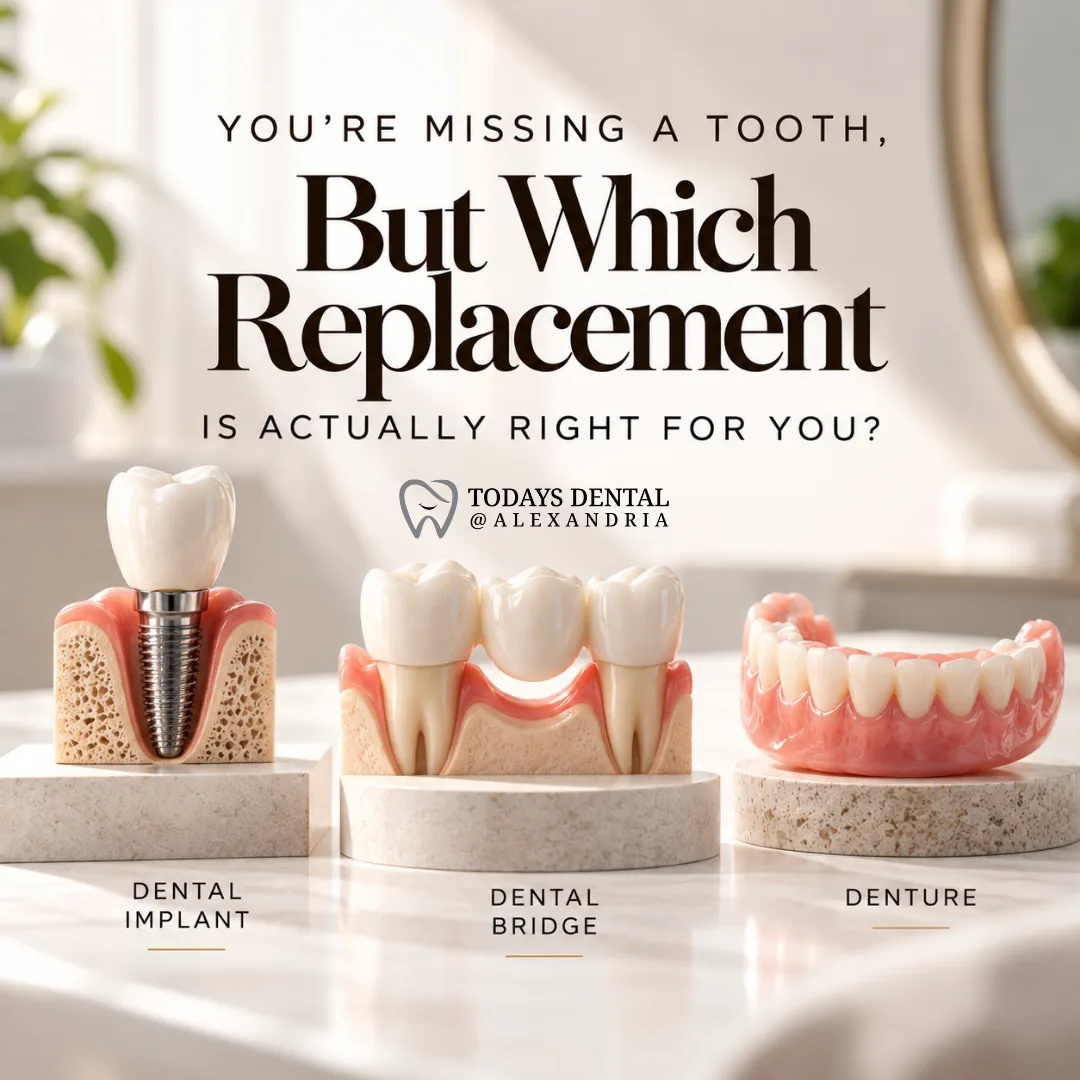
Many people lose a tooth. They may have trouble chewing, speaking, or smiling with confidence. They may also fear the cost and the choices. Prosthodontics focuses on replacing teeth and restoring how the mouth works and looks.
Dental implants are the gold standard for tooth replacement. Here you will know about implants, bridges, and dentures.
Every smile is unique, so choosing a tooth replacement takes careful thought. People can explore several dental restoration methods to restore their oral health and appearance.
Choosing the right tooth replacement affects chewing, speech, and oral health. Dental implants rank as the gold standard and the most common, reliable tooth replacement. Implants look and feel like natural teeth, offer permanent solutions, and do not require grinding down adjacent teeth.
A patient who chose implants reported that the crown felt like a natural tooth and that the implant’s corrosion-resistant materials gave lasting strength.
Patients can also pick dentures or bridges based on needs and budget. Removable dentures work well for full tooth loss. Partial dentures serve when multiple teeth are missing. Implant-supported bridges suit cases where numerous teeth are lost in succession.
A prosthodontist will match options to health, goals, and comfort so the chosen dental restoration fits each person.
Dental implants serve as strong foundations for artificial teeth. They blend seamlessly with natural teeth, offering both function and aesthetics.
Dental implants offer a reliable solution for tooth replacement. They consist of titanium posts that fuse with the jawbone, mimicking the root of a natural tooth. This process creates a stable and durable foundation for artificial teeth. Implants look and feel like real teeth, enhancing both function and aesthetics.
Choosing dental implants requires no grinding down of adjacent teeth. This makes them an ideal choice for restoring single or multiple missing teeth while preserving oral health. As the gold standard in tooth replacement options, they can last a lifetime due to their corrosion-resistant materials.
Dental implants provide excellent solutions for tooth loss, whether it involves a single tooth or several teeth. They offer durability and aesthetic appeal that many people seek.
Individuals considering replacements should seek professional advice customized to their specific needs and preferences regarding oral health options such as dental implants, dentures, or bridges.
Dental bridges fill gaps caused by missing teeth. These fixtures support surrounding teeth while restoring chewing function and improving appearance.
A dental bridge might be the best choice for someone missing multiple teeth in a row. It connects to existing teeth on either side of the gap, providing stability and support. This option is often recommended when several adjacent teeth are lost at once. Dental bridges can save time and money compared to getting implants for each missing tooth.
For some individuals, affordability plays a crucial role in their decision-making process. Bridges generally cost less than dental implants, making them an attractive option for those on a budget.
Patients may also choose bridges if they prefer not to undergo surgery, as this procedure typically does not require invasive techniques like implant placement does.
Dentures come in two types: complete and partial. They offer a practical solution for those who have lost several teeth, but users should weigh the pros and cons before choosing this option.
Moving from complete and partial dentures, it’s essential to weigh the pros and cons of this tooth replacement option. Dentures serve as a practical solution for those facing full tooth loss. They can be removed easily, making maintenance straightforward. Many people find them affordable compared to dental implants.
On the downside, dentures may feel less stable than natural teeth or implants. Some users experience discomfort during eating or speaking. They require regular adjustments since the mouth changes over time. Despite these issues, dentures remain a popular choice for restoring oral health and appearance after tooth loss.
Advanced prosthodontic solutions provide innovative ways to address complex dental needs. These options include maxillofacial prosthetics, which restore function and aesthetics for patients with significant facial impairments.
Maxillofacial prosthetics offer essential solutions for individuals with complex cases of tooth loss. These specialized prosthetics assist in restoring both function and aesthetics after significant oral health issues or injuries.
Dental implants serve as the gold standard in these scenarios, providing durable, permanent replacements for missing teeth. Implants integrate well into the jawbone and closely mimic natural teeth. Their corrosion-resistant materials ensure they can last a lifetime.
Patients facing extensive tooth loss often benefit from advanced dental restorations like these prosthetics. Many require an individualized approach to treatment that considers their unique needs and preferences.
Consulting with a skilled prosthodontist helps determine the best course of action for restoring oral function and appearance effectively. Solutions such as dental bridges supported by implants may be ideal when several adjacent teeth are lost in succession, ensuring seamless integration into existing oral structures while supporting overall gum health.
Innovative digital solutions in prosthodontics improve the process of tooth restoration. These advancements use technology to create precise dental impressions and models. Digital scans capture details quickly and accurately, reducing discomfort for patients. This method helps produce custom implants, bridges, or dentures that fit better.
Dental implants stand out as the most reliable option for tooth replacement. Each implant mimics natural teeth in both appearance and function. They do not require grinding down adjacent teeth for placement.
The durability of dental implants ensures a long-lasting solution; they can last a lifetime with proper care. Moving forward, individuals should consider consulting a prosthodontist to analyze personal needs and preferences regarding tooth replacement options.
Choosing the right tooth replacement option involves careful consideration. A consultation with a prosthodontist helps individuals create a plan that fits their unique needs and goals.
Consulting a prosthodontist is essential for anyone facing tooth loss. This professional specializes in restoring teeth and improving oral health.
Exploring advanced prosthodontic solutions can provide even more options for intricate cases involving missing teeth.
Customized treatment plans fit individual needs. Each person's oral health is different, which affects the choice of tooth replacement options. For some, dental implants serve as a reliable and permanent solution for single or multiple missing teeth.
These implants look and feel like natural teeth and do not require grinding down adjacent ones for placement.
For others, dentures might be a more practical option. Partial dentures offer solutions for those with several missing teeth, while complete dentures address full tooth loss situations.
The right choice depends on factors such as personal goals, comfort preferences, and budget. A consultation with a prosthodontist can help create that suitable strategy to restore oral health effectively.
You can choose from dental implants, bridges, or dentures. Each option has its own benefits and drawbacks.
The right choice depends on your oral health, budget, and personal preferences. A dentist can help you evaluate these factors.
Dental implants work well for many people but may not be suitable if you have certain health issues or insufficient bone structure in your jaw.
The time varies by method. Dental implants may take several months due to healing time; bridges and dentures can often be completed in weeks.
Tell us a little about what you need — we'll be in touch shortly.
4601 Pinecrest Office Park Dr Ste D, Alexandria, VA 22312, USA
Hi! I'm Tooth fairy! Your AI Assistant Ask me anything