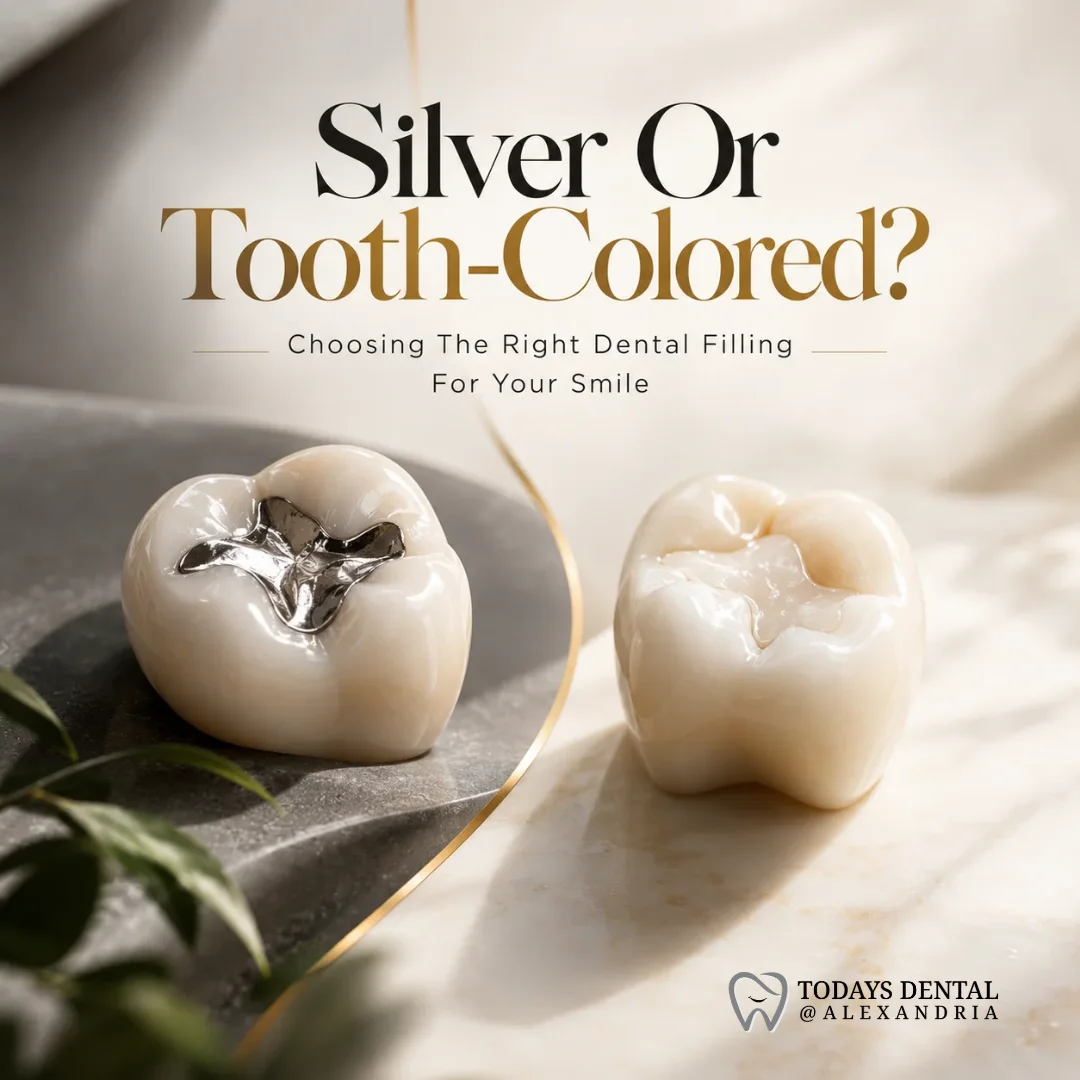
Many people spot a dark spot or feel a sharp twinge and wonder what to do next. They face a choice, silver or tooth-colored, and feel unsure. A Dental Filling can stop pain and stop decay.
Tooth-colored fillings bond to the tooth and help keep more natural structure intact. Here you will know what each material does, and why that matters for looks, cost, and long-term health.
Dental fillings come in various types. Each type has its own benefits and drawbacks, making it essential to choose wisely.
Amalgam fillings use a mix of metals, with silver as a main component. They belong to the metallic option among dental fillings. Dentists install them for cavity treatment and basic restorative work. Patients often pay less for an amalgam filling than for a tooth-colored composite.
They deliver strong durability and handle heavy chewing forces well. The metal can expand over time, and that expansion often leads to tooth cracks and damage. People balance durability, aesthetics, cost, and long-term tooth health when choosing filling materials.
Composite resin wins on visibility and match to enamel, but amalgam still tops many lists for strength.
They bond to tooth structure better than older metal fillings, so dentists can keep more natural teeth while treating cavities. These tooth colored composites mix resin and plastic with fillers to make composite resin that resists wear.
Dentists use a bonding agent to attach the material to enamel and dentin. They match the color of natural enamel and improve dental aesthetics, so visibility drops.
They look more natural than silver and help with smile enhancement. They last well for many cavity treatments, yet they remain less durable than silver fillings. Silver fillings cost less, so some patients pick them for budget reasons.
Silver also expands over time and often causes tooth cracks and damage. The final choice balances durability, appearance, cost, and long term tooth health.
Silver amalgam fillings offer impressive durability. They can handle the pressure from chewing well. However, their metallic appearance may not appeal to everyone. Many prefer a filling that blends better with their natural teeth.
Two basic types of dental fillings exist, silver amalgam and non-metallic tooth-colored fillings. Composite fillings, made of resin and plastic with added fillers, bind with teeth better than older metal fillings.
They match the color of natural enamel very well and improve dental aesthetics. Amalgam fillings cost less, but they expand over time and often cause tooth cracks and damage. Composites are strong, yet less durable than silver, so dentists weigh durability, appearance, cost, and long term tooth health.
Durability and strength play a big role in deciding between silver and tooth-colored fillings, but aesthetics matter too. Tooth-colored fillings blend seamlessly with the natural enamel of teeth.
Patients often prefer them because they look more appealing than shiny silver amalgam. This choice helps people maintain their smile’s beauty without drawing attention to dental work.
Silver fillings stand out and can make smiles less attractive. They disrupt the overall visual appeal of one’s mouth, while tooth-colored options enhance it instead. Composite resins provide a strong bond with teeth, helping preserve their structure as well as appearance.
Although composite fillings may be less durable than metal ones, they offer an aesthetic advantage that makes them popular among those aiming for a flawless smile.
Tooth-colored composite fillings offer a natural look for those concerned about aesthetics. However, they may not last as long as silver amalgam fillings and can require more upkeep.
Tooth-colored fillings blend seamlessly with natural enamel. They match the tooth's color very well, making them hard to spot. Silver fillings, on the other hand, often stand out and can be visually unappealing. Many people prefer aesthetics in dental work; they want a smile that looks good.
Composite resins make up these tooth-colored options. This material enhances appearance and also binds better with teeth than silver fillings do. The improved bonding helps maintain the natural structure of teeth while providing a pleasing look for those undergoing restorative dentistry.
Natural appearance matters, but longevity and maintenance play a crucial role too. Composite fillings bond better with teeth than silver fillings. This strong bond helps maintain the natural structure of the teeth over time.
Composite resins, made from a mix of resin and plastic materials, offer good aesthetic value but fall short in durability compared to silver fillings. Silver fillings last longer; however, they can cause tooth cracks due to expansion over time.
Overall, patients need to weigh factors like durability against aesthetics when choosing between these two filling options for long-term oral health.
The two main types of dental fillings are silver and tooth-colored options. Silver fillings, also known as amalgam, are durable and often used for back teeth. Tooth-colored fillings, or composite materials, blend in with your natural smile.
Choosing between silver and tooth-colored fillings depends on where the filling is needed and your personal preference. If you want a more discreet look for front teeth, go with tooth-colored options. For strength in back teeth, silver may be best.
Yes, while silver fillings last long, they can expand and contract with temperature changes; this might lead to cracks in your teeth over time. Additionally, some people dislike their metallic appearance.
Absolutely! Many choose to replace old silver fillings for cosmetic reasons or because they prefer a more natural look. Talk to your dentist about what’s right for you; they will help guide you through the process.
Tell us a little about what you need — we'll be in touch shortly.
4601 Pinecrest Office Park Dr Ste D, Alexandria, VA 22312, USA

Hi! I'm Tooth fairy! Your AI Assistant Ask me anything