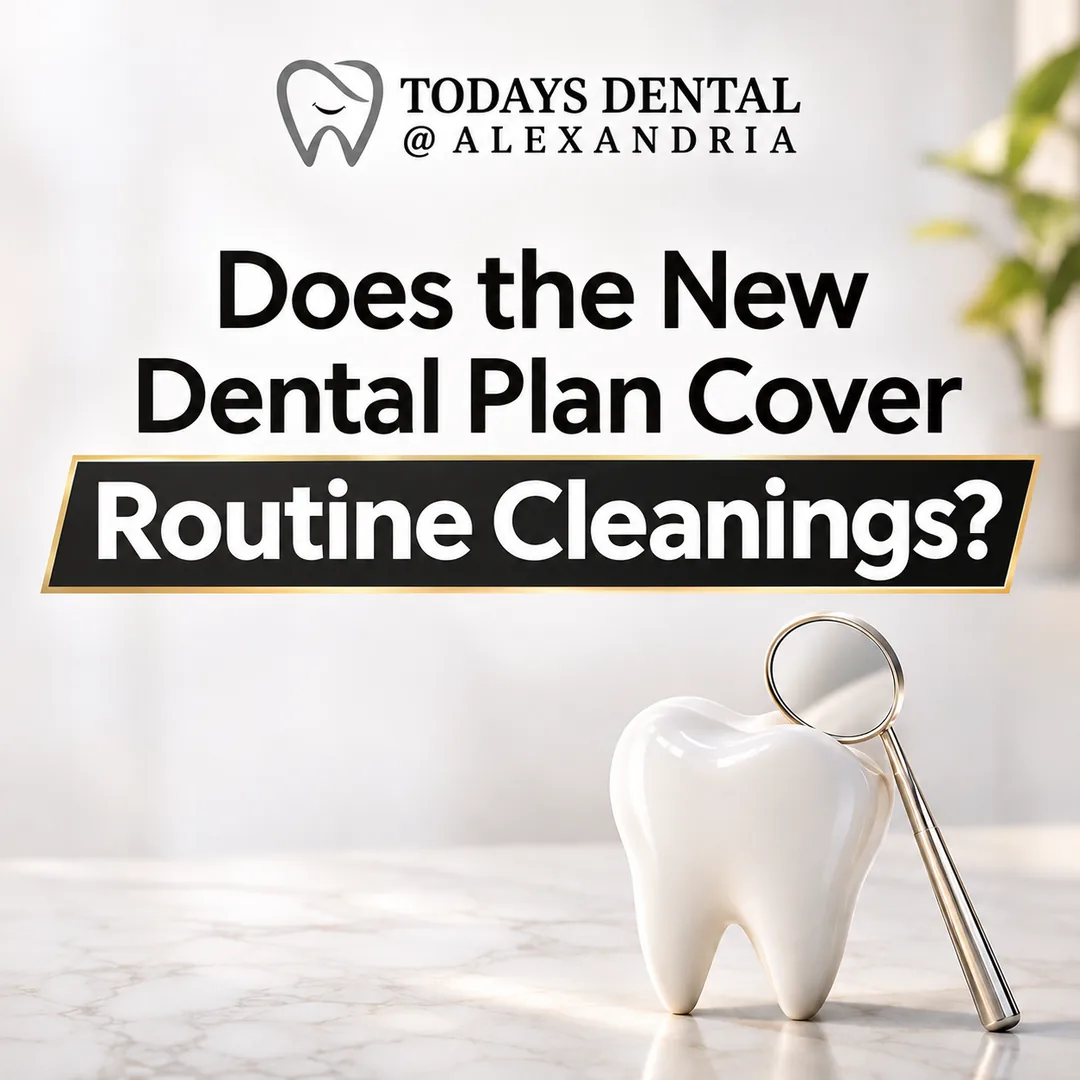
People may check a new dental plan and still wonder if it covers routine cleanings. Unclear rules can make it hard to know what a visit will cost.
Many dental insurance plans cover cleanings and exams at 100%, with no deductible. But dental coverage and dental benefits vary by plan. This guide explains what to check, what costs may apply, and how to confirm coverage before booking.
Coverage for preventive dental care helps people maintain healthy smiles. Routine cleanings, exams, and X-rays play a key role in this plan.
A routine dental cleaning includes tooth cleaning and gentle flossing. Many dental plans cover cleanings at little or no cost, often with no deductible. Professional teeth cleaning is also a core service covered by the Canadian Dental Care Plan.
Dental exams often count as preventive care. Many dental plans cover checkups at 100%, with no deductible, though benefits vary by plan. During an exam, the dental team can spot concerns early, before they become more serious.
The available plan details do not say whether X-rays are covered. Patients can check the plan summary for coverage and limits before booking. The next section covers other services and rules in the new plan.
The new dental plan covers various essential services. It specifies how often members can receive cleanings and other preventive care, making it easier to maintain oral health.
Routine cleanings are commonly covered, but each plan sets its own frequency limit. A patient can check the benefit summary for the allowed number of cleanings.
| Coverage detail | What to check |
|---|---|
| Routine cleanings | How many the plan covers |
| Typical cost | Often little to no cost |
| Preventive care | Often covered at 100%, with no deductible |
Next, the patient can review any age or eligibility rules that affect coverage.
Eligibility for routine cleanings generally depends on the dental plan. Many plans cover preventive services at no cost to patients, regardless of age. Some policies may have specific age limits or requirements, so reviewing the details is essential.
Routine check-ups and cleanings typically remain available for all ages; however, certain plans might emphasize coverage based on different life stages.
Health insurance often provides full coverage for preventive care like standard cleanings and exams without needing a deductible. Dental maintenance can be crucial at any age, helping individuals avoid severe issues down the line while benefiting from early detection by professionals.
Following the discussion on age requirements, network dentist requirements play a key role in coverage. Dental plans usually require patients to visit dentists within their approved network. This ensures that services remain covered at agreed rates.
Each plan may define its own network of providers. Patients should always verify if their preferred dentist is included in this list before scheduling appointments. Choosing an out-of-network dentist could lead to higher costs or limited benefits for routine cleanings and other procedures. Always check with the dental insurance provider for specific details about networks and participating offices.
Out-of-pocket costs can add up quickly, especially with copays and deductibles for cleanings. Many folks find surprise expenses lurking in their dental plans, so it pays to check the fine print. Explore more to uncover how these costs affect your wallet!
In a typical patient billing experience, a routine cleaning may cost little or nothing, depending on the plan.
| Cost | Typical coverage |
|---|---|
| Copay | Often none, or little to no cost |
| Deductible | Typically none for preventive care |
| Coverage example | Many plans cover preventive care at 100% |
Annual maximums define the total amount a dental plan pays for covered services in a year. Plans typically set these limits based on various factors, including the type of procedure and level of coverage.
For routine cleanings, many plans cover preventive care, often at 100% without any deductible. Basic procedures like fillings or extractions may contribute to this annual limit as well.
Patients should know that reaching the annual maximum can affect their out-of-pocket costs for additional treatments later in the year. It's beneficial to understand how much coverage they have left after receiving services throughout the year. Regular check-ups and cleanings not only help maintain oral health but also keep expenses manageable within those annual limits.
Some dental plans come with exclusions that catch many off guard. Certain cosmetic procedures, like teeth whitening or veneers, typically do not fall under standard coverage. Many also leave out services related to orthodontics unless explicitly stated in the plan details.
Coverage for periodontal maintenance cleaning can confuse patients too. Some plans may offer partial reimbursement while others provide full coverage; it all depends on the specific policy terms.
Individuals must read their plan carefully to understand what is covered and what isn’t. A friend recently learned this lesson when trying to get treatment after a routine check-up. She discovered her insurance wouldn't cover her needed follow-up visits!
Understanding dental coverage can feel overwhelming. Knowing how to confirm what your plan includes helps ease that burden.
Scheduling a dental cleaning can feel simple. The right steps help make the process smooth and easy.
Following these steps will help people get their essential dental care without hassle. Regular dental cleanings promote oral health and prevent future issues down the line.
Many dental plans cover routine cleanings as preventive care. Check your plan documents to confirm your coverage.
Your plan may cover cleanings once or twice a year. Check your benefits, since limits can vary.
You may pay nothing for a covered cleaning with an in-network dentist. Your plan may charge a copay or apply a deductible.
Call your dental plan or check its website. Ask about cleaning limits, costs, and in-network dentists before you book.
Tell us a little about what you need — we'll be in touch shortly.
4601 Pinecrest Office Park Dr Ste D, Alexandria, VA 22312, USA
Hi! I'm Tooth fairy! Your AI Assistant Ask me anything